Fist Logo
Pencil Illustration

Banner Design
Varsity Lettering

To-Do Icon


Fist Logo
Pencil Illustration
Banner Design
Varsity Lettering
To-Do Icon
Today is the day that we reveal our final design for the Graphic Design project. My final looks pretty similar to the draft with only some minor (but effective!) edits. Most people would think “oh, that probably took you no time at all to fix”. That’s definitely what I was telling myself as I sat down to work on it.
Fun story: the final took me nearly 4 hours to edit.
For some reason Photoshop wouldn’t let me apply filters to anything.
“How is that possible?”
I wish I knew, maybe I could have fixed the issue sooner. When I first ran into the issue I asked my husband for help, since he has had to photoshop my brother-in-law into our family Christmas card not once, but twice. He hovered over my shoulder, telling me the steps I needed to do to apply the filter. When it didn’t work he proceeded to tell me that I use photoshop wrong; I pushed him away while telling him to go supervise the Lego League kids. I thought the issue was just with the file, so I opened one of the tutorials to try apply a filter to it; I knew it should work because I had been able to do it in the tutorial. The picture remained the same. I scoured the internet to figure out how to reset all preferences, still no filter application. Ultimately I had to uninstall and reinstall Photoshop in order to fix it and creating an entirely new file for the final in the process.
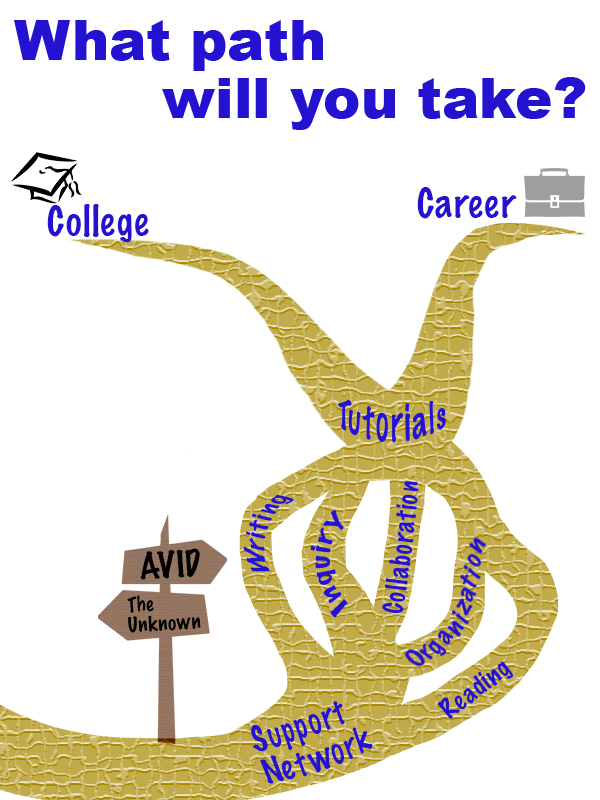
Now that you’ve heard my sob story, here is my rough draft:
And here is my final:
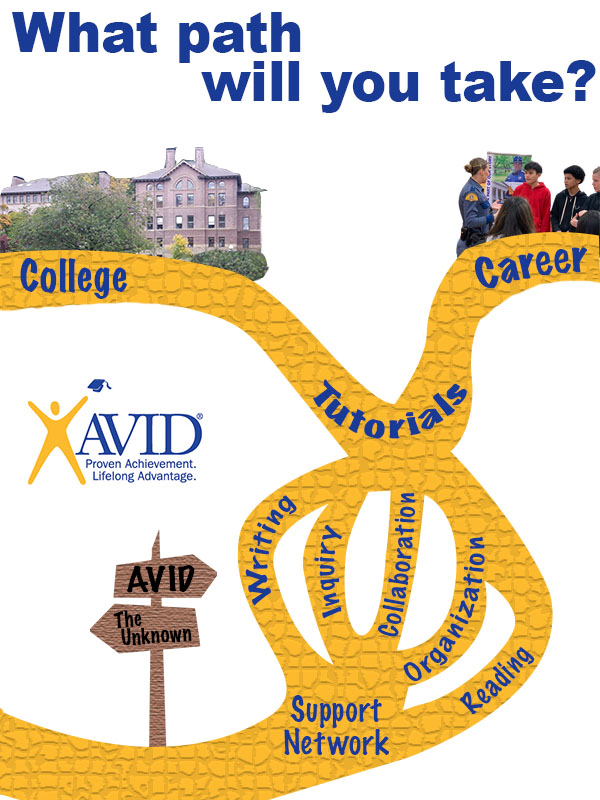
My previous post mentioned my inspiration came from AVID and people asking me what it is. It’s hard to get an 11-year-old excited about a class that teaches them responsibility, so I find myself telling them it is a path they can choose to take. I used that analogy as the basis of the design. I started by searching Creative Commons for a forked path. I got a lot of pictures of forks and linear paths, the complete opposite of what I wanted. It lead me down a rabbit hole of roads, trails, lanes, and signage. I stumbled upon a crossroads sign, and it sparked a bit of inspiration.

“jalan persimpangan” is licensed under CC0 1.0
I liked that the sign one only had two possible paths because I could use one for AVID and the other for “not AVID”. I tried to use the tools to make it look more realistic. I started by adding a Hue/Saturation adjustment layer to turn the color brown. I was hoping that I could find a woodgrain filter, but the closest I could find was the texturize filter. Now that I had a sign, I needed a path to go with it. I started searching Creative Commons for things I knew had forks (since apparently their paths didn’t). I found a clipart of a dead tree.
I used the magnetic magic wand tool to outline the parts of the tree that I wanted to duplicate. I copied the parts to another layer and Frankensteined them together until they had a shape that I liked. At the start, I had the design set up as landscape, but as a built the path everything was too tightly packed together. A lot of paths ran off the page. I started to think that was a bad design choice since the crossroads sign labeled the path that goes off the page as “the unknown”. I figured running more paths off of the page would leave the audience confused, too many unknowns. I changed the orientation to portrait and found it more appealing. Not only did it gave me more space, traveling upwards felt like a more impactful (subliminal) message than traveling sideways. The path is concentrated on the right side of the page, following the rule-of-thirds. The solid color path didn’t look too appealing (in my opinion), so I decided to add texture to it to make it more interesting. I chose the mosaic filter because I thought it gave a look similar to a brick.
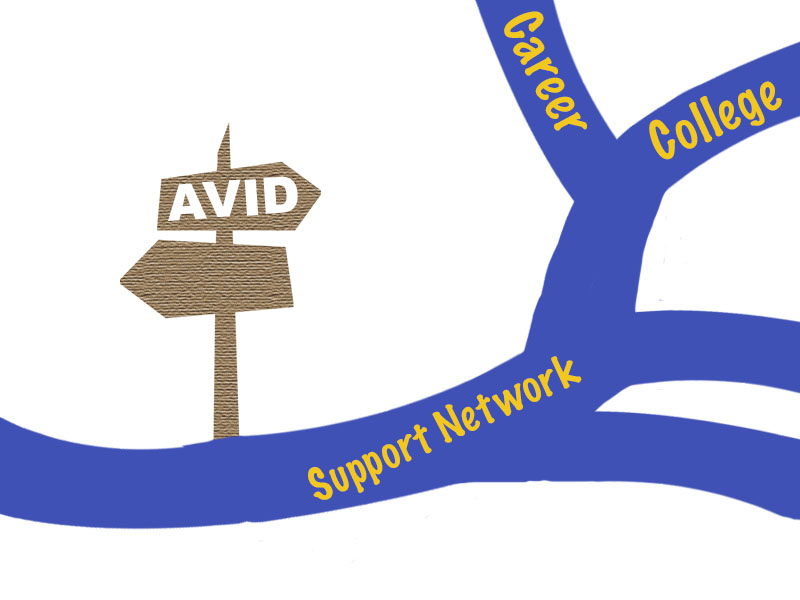
Starting design with the layout being landscape.
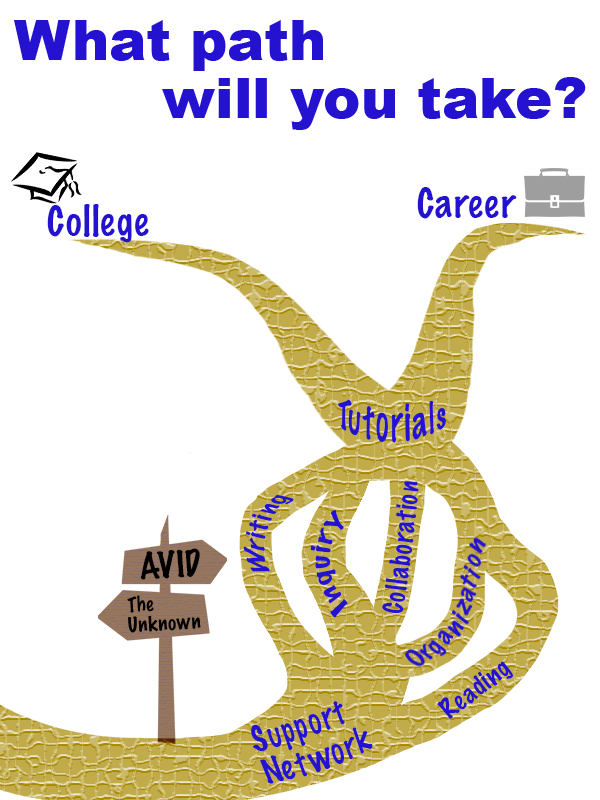
The words that are spread throughout the path are the main components of AVID. The course’s foundation is building relationships and creating support networks for kids, so I knew that needed to be the first thing on the path. The entire curriculum works on developing kids’ WICOR skills. Usually, in a lesson you’ll focus on one or two of the skills, but they are put to use during tutorials, which are run twice a week. Our ultimate goal is that kids will then utilize those skills to be successful in their careers and/or further their education. I played around a lot with the text settings. Most of the terms are warped to an arc so they look like they curve with the path. I also had to adjust the kerning and height of the letters using the character settings.
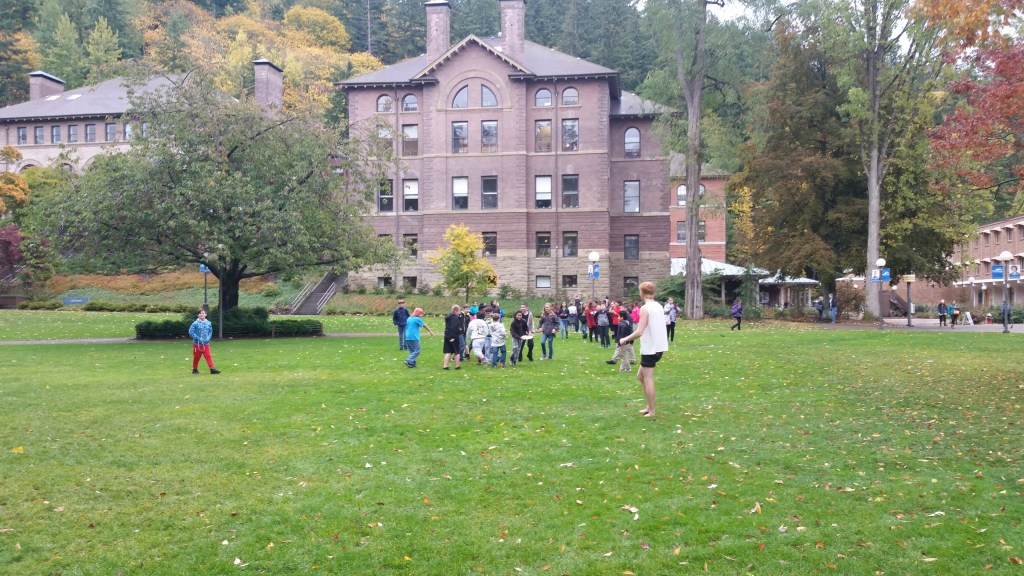
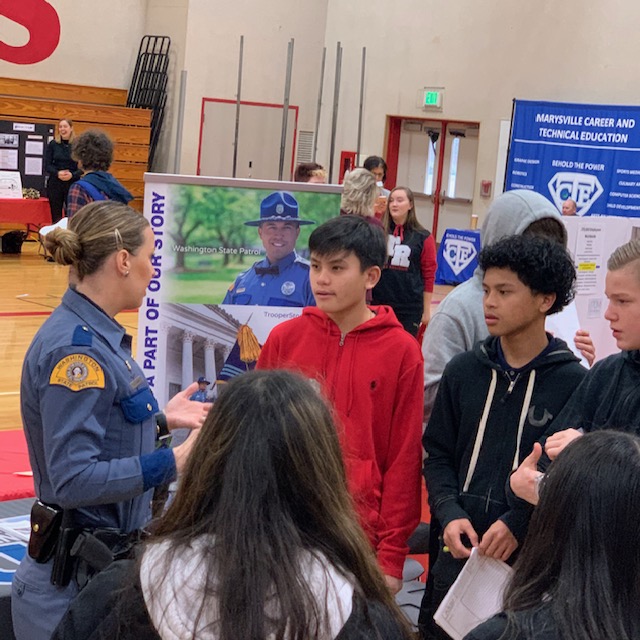
I placed pictures at the end of the paths instead of clipart at the suggestion of my peers. At first, I couldn’t decide if I wanted to frame the images or cut them out and blend them into the background. Eventually, I decided to cut and blend because putting them in frames made them feel separate and not connected with the clipart. To do this I used the magnetic magic want tool to outline the parts that I wanted. I then used the eraser tool to create a feathered edge on parts of the photos.
My color decisions came pretty easily. Since AVID is a national organization I figured it would be best to use their colors (gold and blue) as the main components. The writing popped out better when it was gold and the path was blue, but I ultimately decided on using gold for the path because of “golden opportunity”; it also reminded me of the Wizard of Oz and the yellow brick road. On my rough draft, I noticed I used the wrong values of blue and gold, so I used the dropper tool to match them to the AVID logo. When I went to change the color of the path is when I ran into my filter issue. I tried to use the fill tool, but it would only color one “brick” at a time. I decided to redraw the path with the pen tool, which was very confusing since I could see the outline of what I drew but it wasn’t a part of any of the layers. I saved it as a custom shape and then used the shape tool to draw it again. I struggled with getting it filled, but found the shape under the paths tab and linked it to a layer. I was able to color the layer with the correct gold and then applied the filter to just the path. I noticed that when I did it this way, I still have the freedom of changing the path color if I want without having to fill each individual brick. I kept the background white so that it was neutral and didn’t take away or distract from the overall message.
I don’t know if my explanation does a good enough job of explaining the design concepts we’ve been learning. I can, however, sum it up like this:
“Design is not a science, just move things around until it feels right”
Matt Greenwood
The assigning of this project came in the midst of one of the most chaotic times in a teacher’s life- end of term. On top of finishing grades for 150 students and dealing with parent and student inquiries about how to improve grades, as a school we decided this would be a great time to hold a college and career fair for our 8th grade and AVID students. Being the AVID co-coordinator, I had the responsibility of organizing the event.
The event turned out amazing. We had 30+ professionals, counselors from our high schools, and 9 colleges/education programs. The kids enjoyed it and were really appreciative for the opportunity, with the exception of one who stated it was far too stressful to think about the future (adulthood will be a fun experience for that kid). I had a bunch of people ask what AVID was, so it gave me inspiration for my graphic design project: make a graphic representation of what AVID is.
AVID is program aimed at closing the achievement gap by giving kids the college readiness skills for success within the global society. Recently they’ve been shifting to try to include more career focus, since we realize not every kid is destined to go to college (not because they’re not capable, just because not everyone should be expected to take the same path).
Originally I was intending to use photos from our events to show what AVID is like. I received a lot of photos my coworkers took at past AVID events. None of them really jumped out at me; they didn’t make the program seem exciting. I started from scratch with the idea that AVID is a path you can choose to take.
I used Creative Commons to find clipart images of a crossroads sign and tried to find a branched path. I had no luck finding a path, but did find a nice clipart of a dead branched tree, so used that as a base for a path. I decided to have the path go upwards since it felt like more of a journey forward that way. The path is also shifted to the right side of the page to follow the rule of thirds. I took the main components that makeup AVID and placed them along the path so kids could see what being a part of AVID would entail. All pieces were written in the same font and the same color, the similarity suggesting that they are all connected. The colors used for the main components are AVIDs colors: blue and gold. For the other components, neutral colors were used so they didn’t distract from the message of AVID.
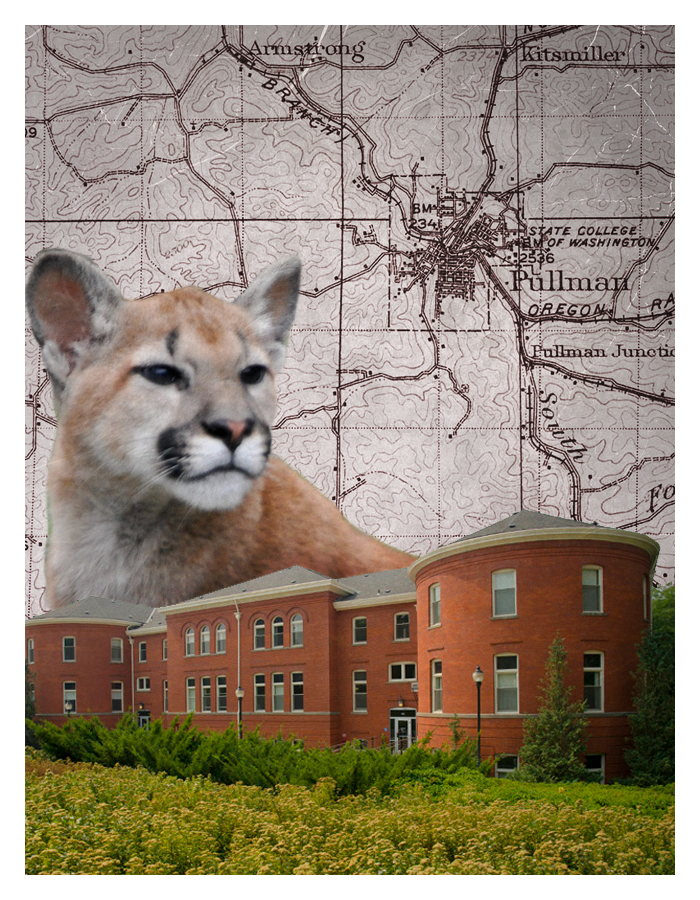
After making this graphic I double-checked the requirements and noticed that it said it must include three images. I got a little stressed that images means photos, so I began to think that the design didn’t meet requirements. I made a second design project with photos just in case. I don’t think it follows as many design rules, and overall I feel like it got to be too busy looking. My husband likes to constantly tell me I’m an overachiever, so you bet that I’m throwing it on here just in case the first one doesn’t make the cut.
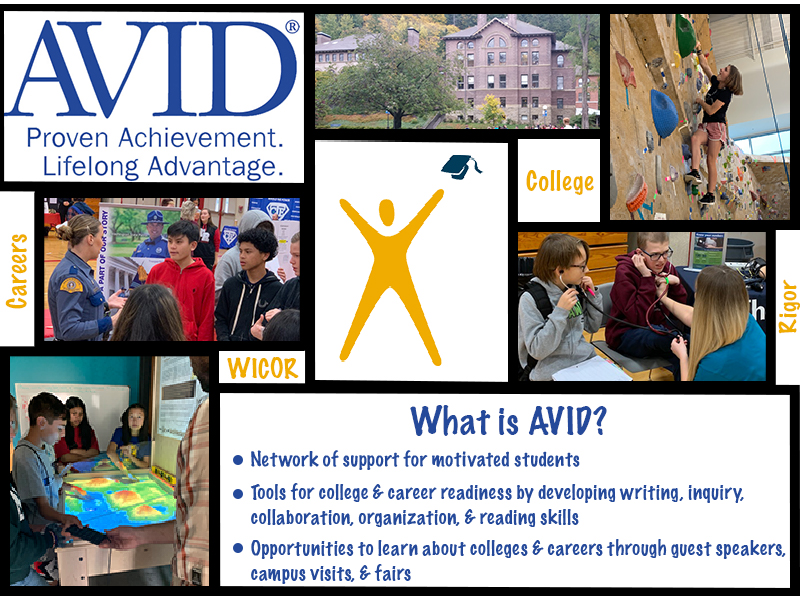
Photo Permissions for 1st design:
Crossroads sign: “jalan persimpangan” is licensed under CC0 1.0
Tree: “branch” is licensed under CC0 1.0
Graduation Cap: “kolej” is licensed under CC0 1.0
Briefcase: “office” is licensed under CC0 1.0
Photos for the 2nd design were all taken by my self or given to me with permissions by my co-workers J. DeLazzari & D. Hendrickson.
Below are the tutorials that we were asked to complete for the Photoshop assignment.
Introduction to Layers Tutorial
Adjustment Layers Tutorial
Layer Masks Tutorial
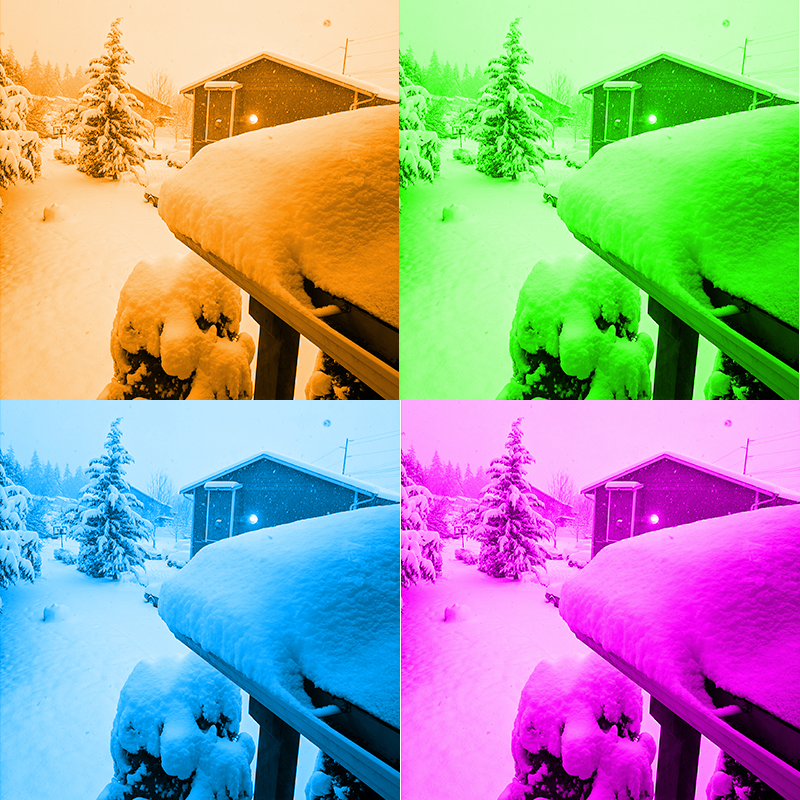
Text & Effects Tutorial
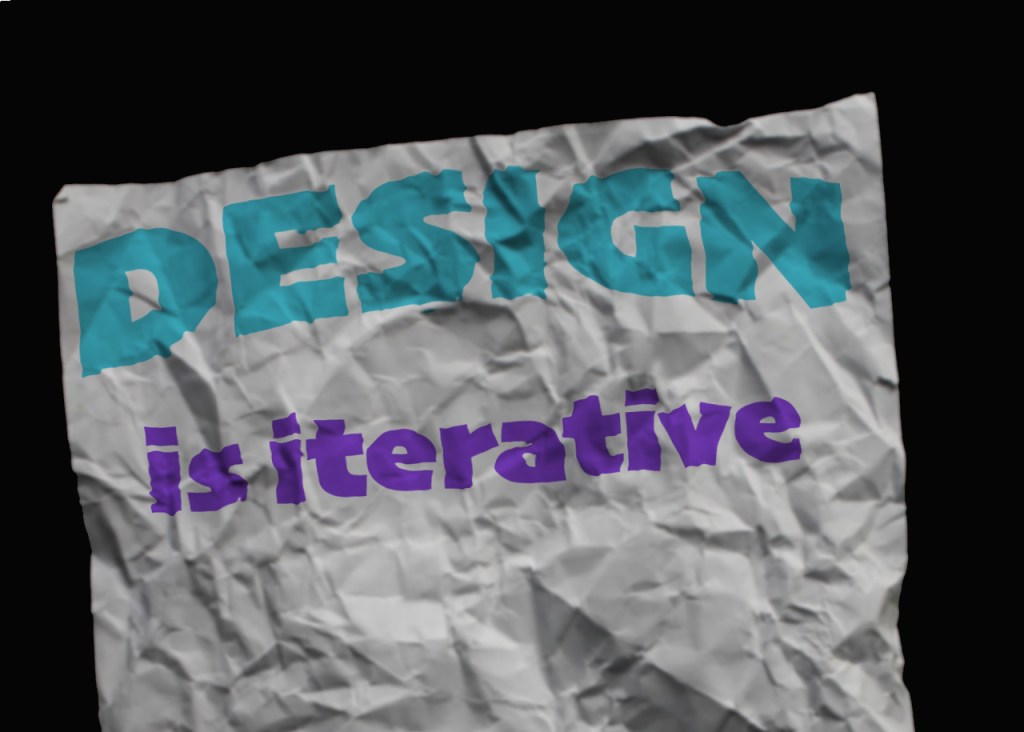
Cutouts & Blending Modes Tutorial
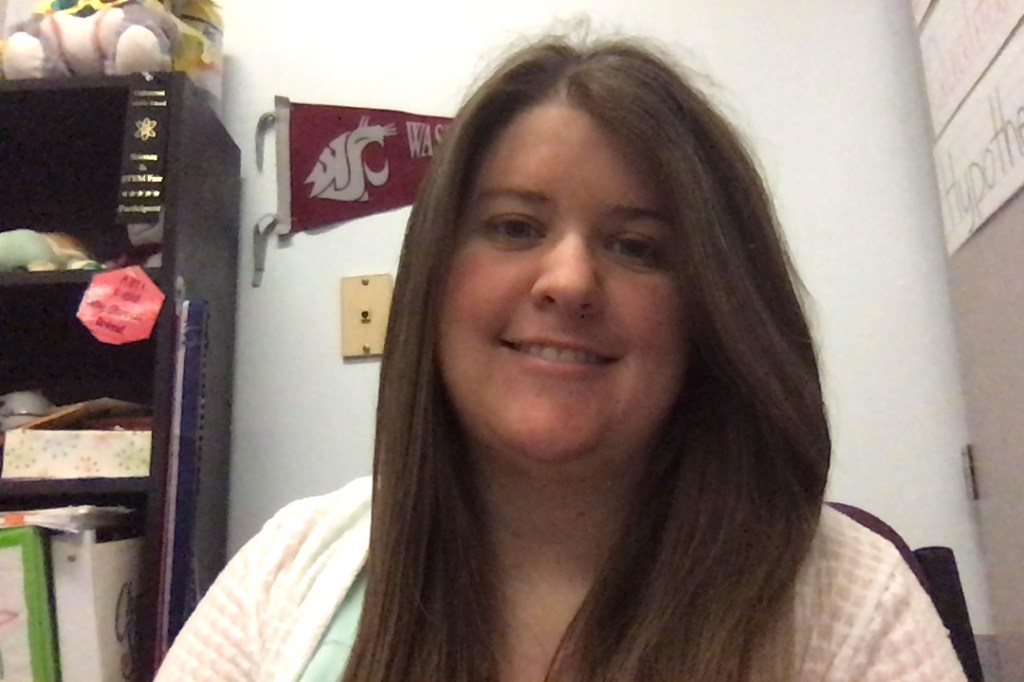
My name is Kacee Kukull. I live in Washington state with my wonderful husband and our fur children.
The last few years of my life have been spent working as a middle school teacher, trying to find ways to engage students in learning and spark their interest in science and engineering. On top of my traditional classroom responsibilities, I also coach our school’s FIRST Lego League team and run the Makerspace. Anything that our school does that is science related, you’ll find me playing a part in it somehow. I’m also heavily involved in our school’s AVID program, playing the role as co-coordinator for the last 4 years.
Because I clearly don’t have enough on my plate, I recently decided to go back to school to get my Masters in Molecular Biosciences. Getting my Masters will help me advance in my profession. While I love teaching, I don’t know if it will be my passion forever, which is why I chose to pursue a Masters in science instead of education. This gives me the freedom to jump back into various science-based careers if I want to. The decision to get my Masters is also what has led me to the creation of this blog. It’s purpose is to act as a portfolio for my COM561 course.
If you don’t find me working on school related things, then you’ll catch me reading or baking. My husband and I also spend a fair amount of our time building Lego sets or playing board games and video games.
For this class, we were asked to pick a topic of focus for our work. I am going for an obvious choice: education.
When I was little and asked what I wanted to be when I got older, I would tell people that I didn’t know what I wanted to do, but I was going to move far away and make a lot of money. When my college entrance essay asked me the same question I knew that a response of “IDK, but I want money” wouldn’t be good enough. I couldn’t come up with a good answer to the question, so I did what every teenager does and asked my friends. I remember asking a lot of people, but the only answer I remember came from Brittany. She looked at me like I was dumb for asking and simply stated, “I always assumed you’d be a teacher.” I clearly remember laughing at her.
For lack of a better idea, I followed Brittany’s advice and decided to go into teaching. Starting off was rough and I don’t think I did very well. However, the more time that I spent in a classroom with students, the more I got to know them. Here’s the tricky thing about getting to know people, you get invested in them, in their well-being, and you start rooting for them to be successful. After years of this, teaching and education stopped being just a paycheck and it has become my passion. Here I am, 14 years later, 8 years deep into a career that I love.
“The future of the world is in my classroom today.”
Ivan Welton Fitzwater
The great thing about the topic of education is that everyone has some kind of connection to it or feelings about it. The downside is that almost everyone feels like they are an expert on it since they have spent some form of time in a classroom (let me assure you, sitting at a desk as a student doesn’t make you an expert on education).
I don’t know exactly what aspect of education my work will focus on. Maybe it will be about student engagement, maybe teaching strategies, maybe sometimes venting about the state that it’s in. I guess we’ll just have to wait and see.

 Kacee's Blog